Vegetable Ramen Bowl
Highlighted under: Wellness Recipes
When it comes to a comforting meal, I always find myself reaching for a warm bowl of vegetable ramen. The combination of flavors, textures, and colors truly makes this dish a feast for the senses. I love how quick and straightforward it is to prepare, making it perfect for busy weekdays or a cozy weekend treat. The medley of fresh vegetables and fragrant broth awakens my taste buds, and it's easy to customize with whatever I have on hand. Dive into this vibrant and nutritious ramen bowl with me!
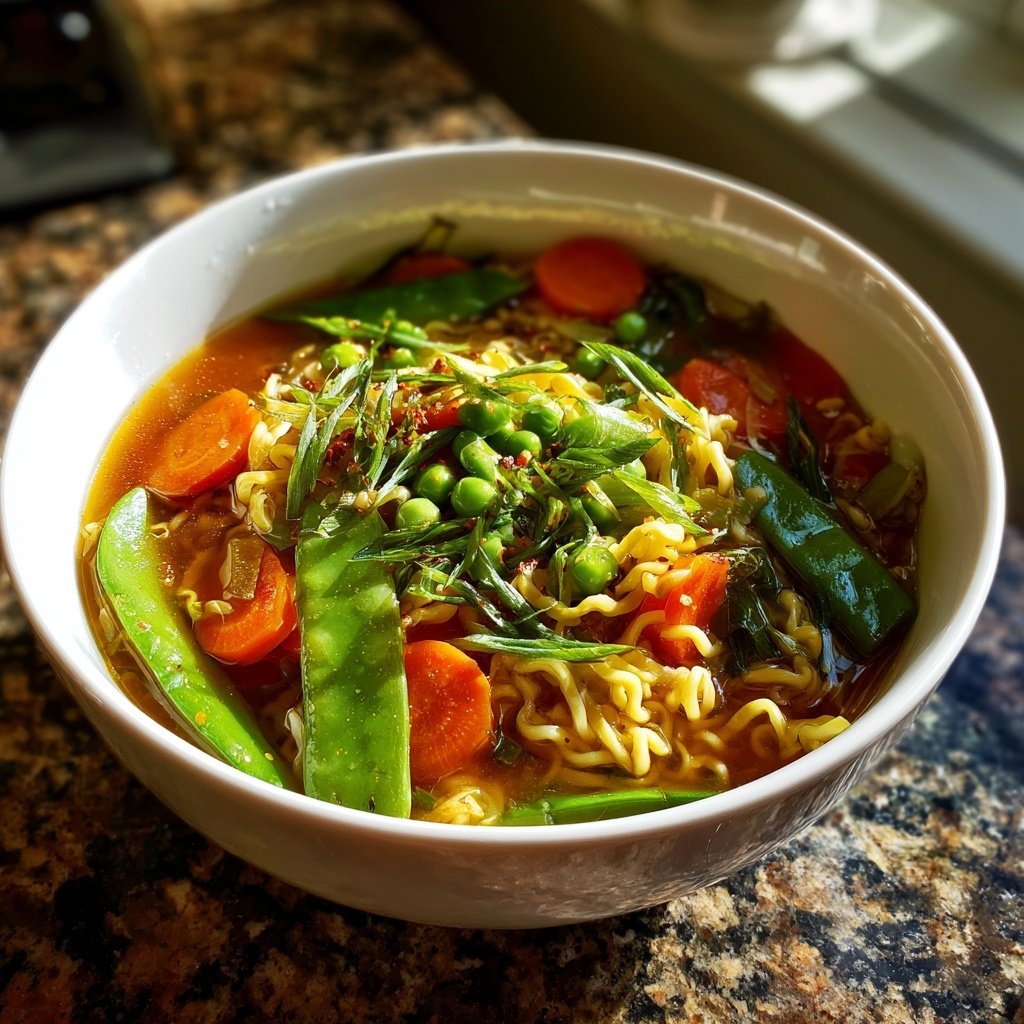
I remember the first time I made this vegetable ramen; it was one of those rainy days that called for something warm and satisfying. I experimented with various seasonal vegetables from my local market, and the result was a vibrant and flavorful dish that quickly became a family favorite. Adding a splash of soy sauce and a sprinkle of sesame oil at the end elevated the broth and enriched the entire experience.
What I truly enjoy about this ramen is its versatility. You can easily switch up the vegetables depending on what you have or prefer, and it will still taste fantastic. Fresh herbs like cilantro or green onions added just before serving provide a refreshing punch. Trust me, once you try this homemade vegetable ramen, you’ll never want the instant kind again!
Why You'll Love This Recipe
- Rich in flavors with a delightful umami taste from the broth
- Quick and easy to prepare, perfect for any night of the week
- Nutritious and customizable with your favorite vegetables
Unlocking Umami: The Broth
The broth is the heart of your vegetable ramen, providing a rich umami foundation. Using high-quality vegetable broth can greatly impact the flavor profile of the dish. Opt for a low-sodium variety to have better control over the saltiness as the soy sauce contributes significant salinity. If time allows, consider simmering your own broth with roasted vegetables and seaweed to deepen the flavors. Start with a flavorful base, and you’ll set the stage for a delicious meal.
Adding miso paste introduces a layer of complexity that enhances the broth’s taste. If you’re new to miso, start with a lighter white miso for a milder flavor. Stir it in after the broth has simmered to prevent overcooking it and losing its beneficial enzymes. The incorporation of sesame oil brings an aromatic element that complements the vegetables beautifully, so don’t skip this step for that nutty richness.
Perfectly Cooked Noodles
Cooking the ramen noodles just right is crucial for that authentic texture. Pay attention to the cooking time specified on the package—most noodles require only 3-4 minutes. Keep in mind that the noodles will continue to soften even after being removed from heat, so it’s wise to drain them when they’re al dente. A quick rinse with cold water after draining can stop the cooking process and prevent them from clumping together. This step ensures your ramen bowl maintains that delightful bite.
Feel free to swap out traditional wheat ramen noodles with rice noodles for a gluten-free version. Both types tend to absorb flavors beautifully, but be aware that rice noodles can be more delicate, requiring careful attention during cooking. You might need to adjust cooking times based on the brand, so check the package if you’re experimenting with different noodles.
Customizing Your Creation
Versatility is a highlight of this vegetable ramen, allowing you to incorporate whatever vegetables you love or have on hand. For instance, mushrooms add an earthy flavor while zucchini or spinach wilt down wonderfully with minimal cooking. If you want to boost the protein, consider adding tofu or edamame. Just make sure to add heartier vegetables like carrots and broccoli earlier in the cooking process, while softer items can go in towards the end to preserve their texture.
Planning to make this dish ahead? The broth can be prepared in advance and stored in the refrigerator for up to three days, which makes weeknight meals a breeze. Store your noodles and vegetables separately to maintain their freshness. When you’re ready to enjoy, simply reheat the broth, add the noodles, and vegetables, and your homemade ramen will be as good as fresh.
Ingredients for Vegetable Ramen Bowl
Vegetables
- 1 cup broccoli florets
- 1 cup snap peas
- 1 carrot, julienned
- 1 bell pepper, sliced
- 2 green onions, chopped
Noodles and Broth
- 4 servings of ramen noodles
- 4 cups vegetable broth
- 2 tablespoons soy sauce
- 1 tablespoon sesame oil
- 1 tablespoon miso paste (optional)
Toppings
- Sesame seeds
- Chili flakes
- Fresh herbs (cilantro or basil)
Instructions
Prepare the Vegetables
Begin by washing and chopping all your vegetables into bite-sized pieces. This will ensure they cook evenly and quickly in the ramen.
Cook the Broth
In a large pot, bring the vegetable broth to a boil. Stir in the soy sauce, sesame oil, and miso paste if using. Let it simmer for a couple of minutes.
Cook the Noodles
Add the ramen noodles to the boiling broth and cook according to package instructions, usually about 3-4 minutes.
Add the Vegetables
Once the noodles are almost done, add the prepared vegetables to the pot. Allow them to cook for an additional 2-3 minutes until just tender.
Serve
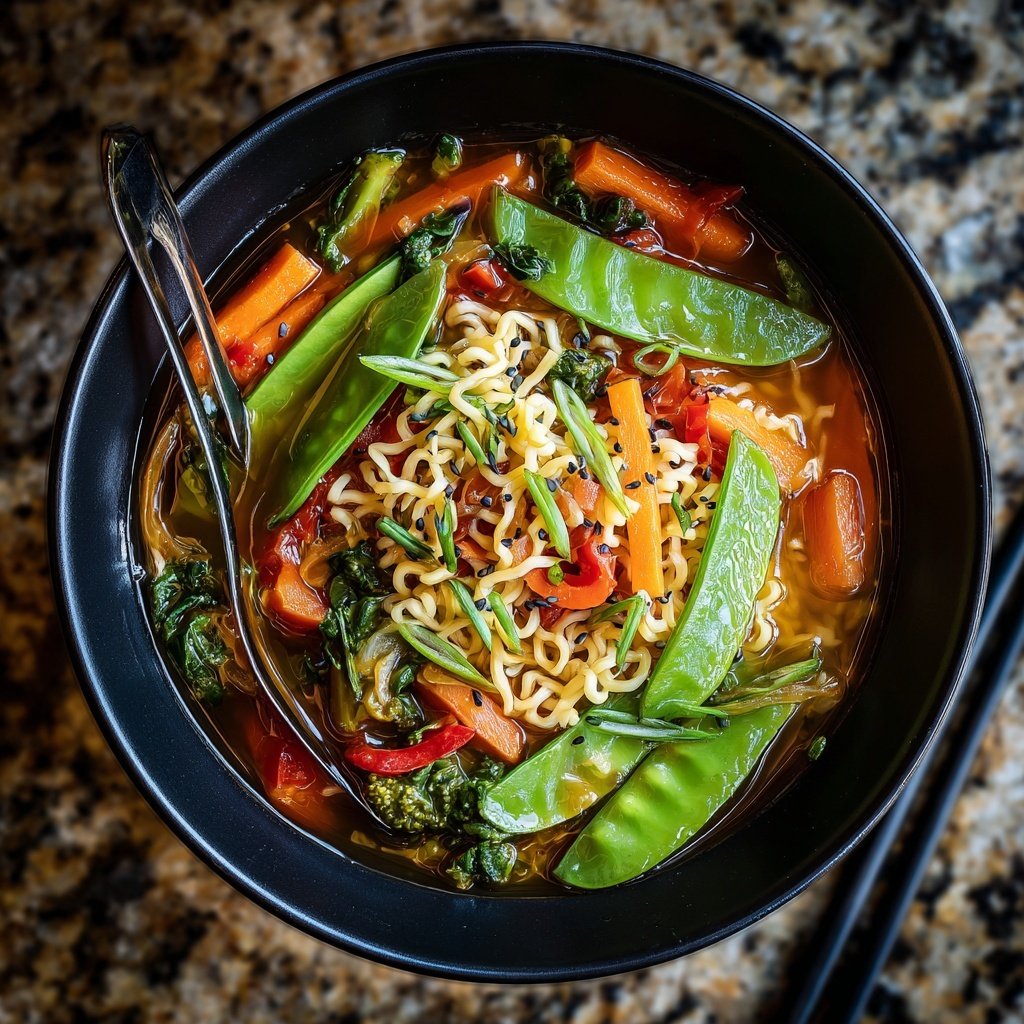
Ladle the ramen into bowls and garnish with chopped green onions, sesame seeds, chili flakes, and fresh herbs. Enjoy your homemade vegetable ramen!
Pro Tips
- For extra protein, consider adding tofu or an egg to your ramen bowl. Searing the tofu prior to adding it to the broth can give it a nice texture and flavor boost.
Storage Tips
To keep your vegetable ramen tasty and fresh, proper storage is essential. The broth can be refrigerated for up to four days, but it's best to store the noodles and vegetables separately to prevent sogginess. If you have leftovers, consider reheating only what you'll consume to maintain their quality. If freezing, let the broth cool completely before transferring it to an airtight container. You may want to freeze the broth in smaller portions for easy defrosting and quick meals.
For the vegetables, blanched vegetables can be frozen. However, delicate greens like spinach should be used fresh, as freezing can compromise their texture. Consider sautéing or lightly steaming them before adding to the ramen to ensure they keep their bright color and nutrient content.
Serving Suggestions
When serving your vegetable ramen, presentation is key. Ladle the soup into bowls and carefully arrange the colorful vegetables on top, making it visually appealing. Adding a few fresh herbs like cilantro or basil not only enhances flavor but also adds a vibrant touch. Don't shy away from garnishing with a few extra chili flakes or a drizzle of sesame oil just before serving to enhance the flavors even further.
To elevate your ramen experience, pair it with pickled vegetables such as kimchi or pickled ginger on the side. These additions provide a refreshing contrast and can enhance the overall dining experience. A soft-boiled egg, cooked to a perfect medium where the yolk is still slightly runny, can also add richness to each spoonful, making it feel like a special treat.
Questions About Recipes
→ Can I use different vegetables?
Absolutely! Feel free to use any vegetables you have on hand, such as spinach, zucchini, or mushrooms.
→ How can I make this vegan?
Simply ensure you use vegetable broth and omit any animal products, like eggs or meat.
→ Can I prepare the broth in advance?
Yes, you can make the broth ahead of time and store it in the fridge for up to 3 days. Just reheat when ready to use.
→ What can I do with leftovers?
Leftover ramen can be refrigerated for up to 2 days. Reheat gently on the stovetop, adding a little more broth or water if necessary.
Vegetable Ramen Bowl
What You'll Need
Vegetables
- 1 cup broccoli florets
- 1 cup snap peas
- 1 carrot, julienned
- 1 bell pepper, sliced
- 2 green onions, chopped
Noodles and Broth
- 4 servings of ramen noodles
- 4 cups vegetable broth
- 2 tablespoons soy sauce
- 1 tablespoon sesame oil
- 1 tablespoon miso paste (optional)
Toppings
- Sesame seeds
- Chili flakes
- Fresh herbs (cilantro or basil)
How-To Steps
Begin by washing and chopping all your vegetables into bite-sized pieces. This will ensure they cook evenly and quickly in the ramen.
In a large pot, bring the vegetable broth to a boil. Stir in the soy sauce, sesame oil, and miso paste if using. Let it simmer for a couple of minutes.
Add the ramen noodles to the boiling broth and cook according to package instructions, usually about 3-4 minutes.
Once the noodles are almost done, add the prepared vegetables to the pot. Allow them to cook for an additional 2-3 minutes until just tender.
Ladle the ramen into bowls and garnish with chopped green onions, sesame seeds, chili flakes, and fresh herbs. Enjoy your homemade vegetable ramen!
Extra Tips
- For extra protein, consider adding tofu or an egg to your ramen bowl. Searing the tofu prior to adding it to the broth can give it a nice texture and flavor boost.
Nutritional Breakdown (Per Serving)
- Calories: 300 kcal
- Total Fat: 10g
- Saturated Fat: 1g
- Cholesterol: 0mg
- Sodium: 900mg
- Total Carbohydrates: 46g
- Dietary Fiber: 6g
- Sugars: 4g
- Protein: 10g