Spring Vanilla Bean Cake
Highlighted under: Cozy Recipes
I absolutely love making this Spring Vanilla Bean Cake as a delightful way to celebrate the changing seasons. The aroma of fresh vanilla fills the kitchen, and the light texture of the cake is simply irresistible. With just a few simple ingredients, I can create a dessert that not only looks beautiful but tastes divine. This cake is perfect for spring gatherings, birthdays, or even just as a sweet pick-me-up on a sunny afternoon. Trust me, this recipe will become a staple in your baking repertoire!
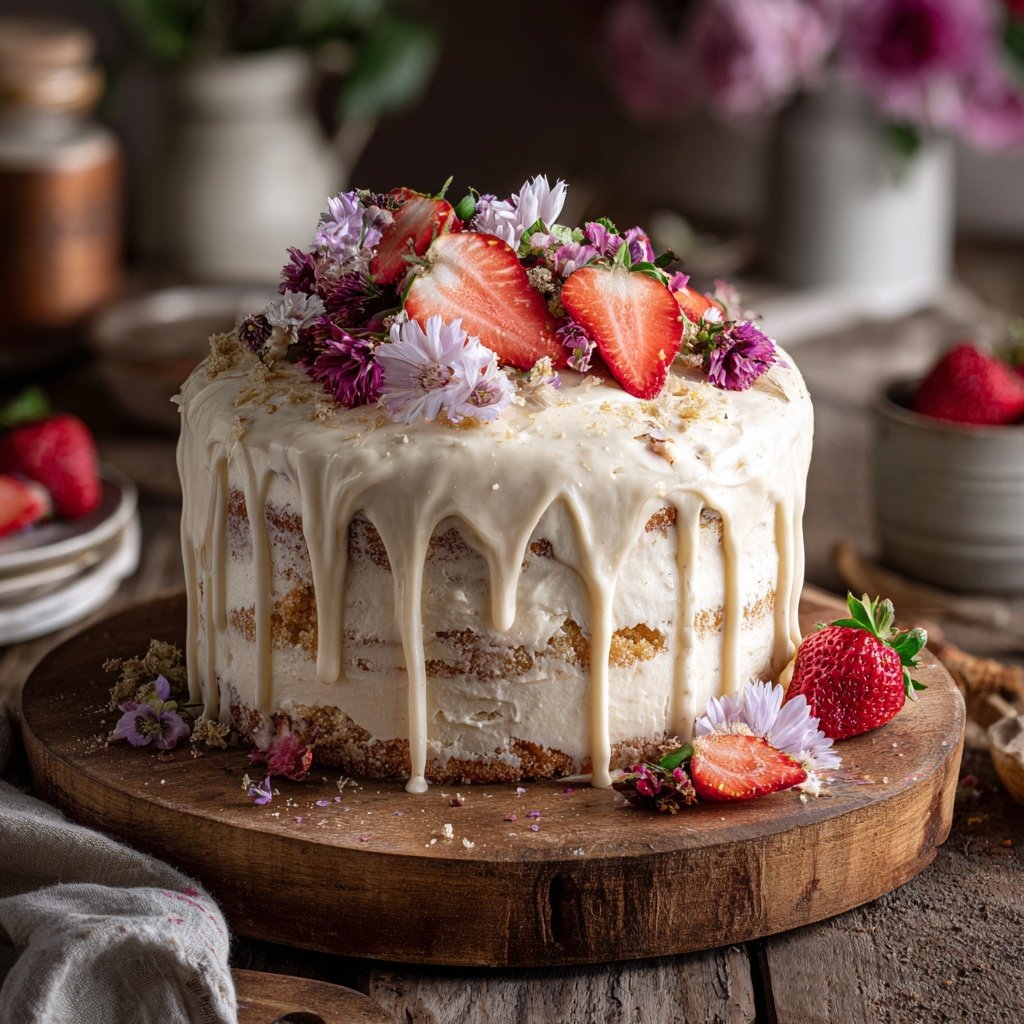
When I first started baking, I remember being mesmerized by the allure of a perfectly baked vanilla cake. Through trial and error, I've learned that the quality of vanilla makes all the difference. Using real vanilla beans instead of extract elevates this cake to another level, giving it a distinct flavor that is both rich and aromatic.
I also discovered that letting the cake cool completely before frosting it helps maintain its moisture, resulting in a melt-in-your-mouth experience. The combination of flavors truly shines in every bite, making it a favorite among friends and family!
Why You'll Love This Cake
- Rich vanilla flavor enhanced by the warmth of fresh vanilla beans
- Light and airy texture that melts in your mouth
- Beautiful presentation that’s perfect for any spring celebration
Mastering the Texture
Achieving the perfect light and airy texture for your Spring Vanilla Bean Cake is essential. The creaming method is key; be sure to cream the butter and sugar until it’s light in color and fluffy, which usually takes about 4-5 minutes with a stand mixer. This process incorporates air into the batter, giving your cake that dreamy, melt-in-your-mouth quality. If using a hand mixer, be patient and allow for ample mixing time to achieve the same result.
When alternating the dry ingredients with the buttermilk, be careful not to overmix. Overmixing can lead to a denser cake due to gluten development in the flour. Mix just until you see no flour streaks. If you find the batter a bit too thick for your taste, a splash of additional buttermilk can be gently folded in to achieve your desired consistency.
Ingredient Insights
The use of a fresh vanilla bean in this cake elevates its flavor significantly compared to vanilla extract alone. The tiny black seeds not only infuse the batter with their aromatic quality but also create beautiful specks throughout the cake. If fresh vanilla beans are hard to find, you can substitute with high-quality vanilla extract—just use 1 tablespoon as the beans pack a powerful punch.
Buttermilk is another star ingredient here, lending moisture and a slight tang to the cake. If you don’t have buttermilk on hand, a quick substitute can be made by adding 1 tablespoon of vinegar or lemon juice to 1 cup of milk. Let it sit for 5-10 minutes before using. This acidity reacts with the baking powder, helping the cake rise beautifully.
Storage and Serving Tips
If you're preparing the cake ahead of time, it stores well at room temperature for up to two days when wrapped tightly in plastic wrap. For longer storage, place the unfrosted layers in an airtight container and refrigerate for up to one week, or freeze for up to three months. To thaw frozen cakes, move them to the refrigerator overnight before frosting.
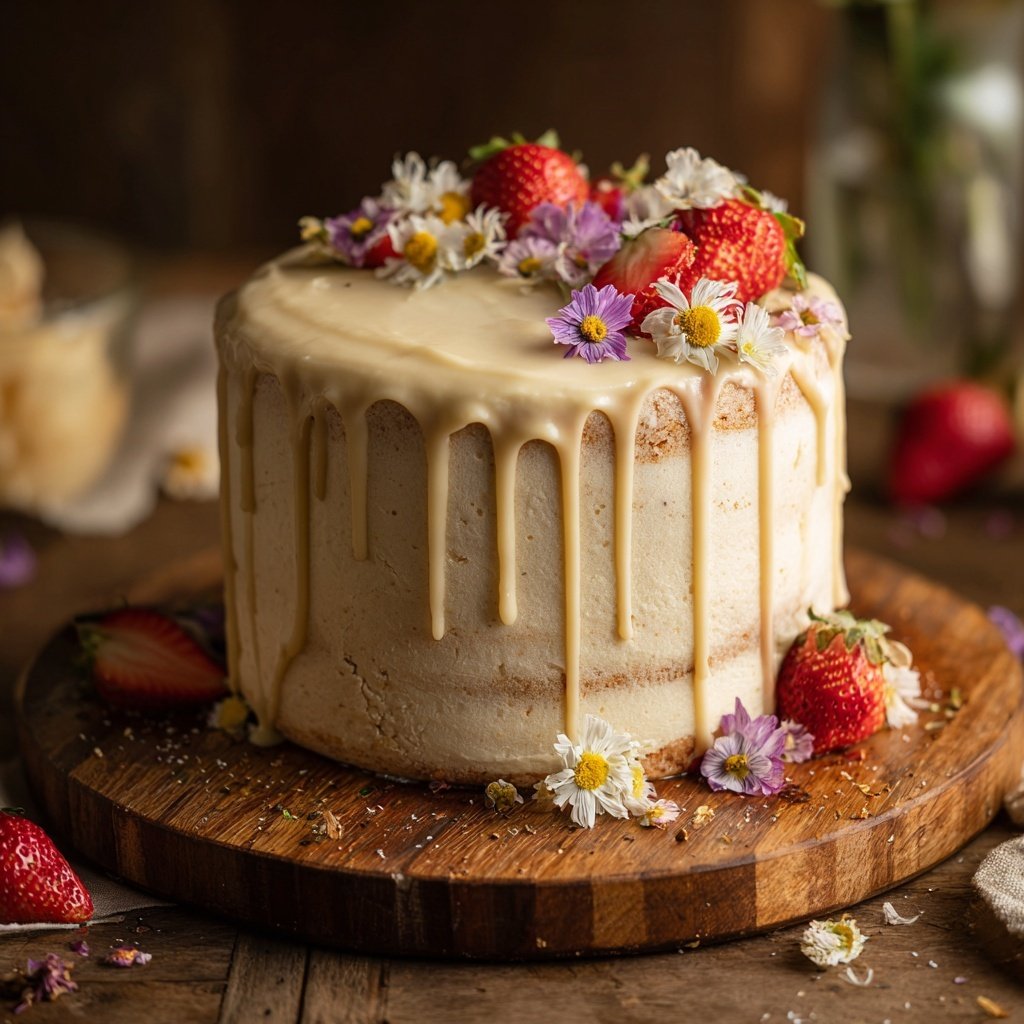
For a delightful presentation, consider garnishing your cake with fresh spring fruits like strawberries or edible flowers. This not only adds color but also complements the vanilla flavor. If you wish to change up the frosting, a light lemon glaze can be drizzled over the top for a refreshing twist. Don't hesitate to experiment with flavors that capture the spirit of spring!
Ingredients
Ingredients
For the Cake
- 2 cups all-purpose flour
- 1 ½ cups granulated sugar
- ½ cup unsalted butter, softened
- 1 cup buttermilk, room temperature
- 3 large eggs, room temperature
- 1 tablespoon baking powder
- 1 teaspoon salt
- 1 vanilla bean, seeds scraped
For the Frosting
- 1 cup unsalted butter, softened
- 4 cups powdered sugar
- 2 teaspoons vanilla extract
- 2-4 tablespoons heavy cream
Instructions
Instructions
Prepare the Cake
Preheat your oven to 350°F (175°C). Grease and flour two 9-inch round cake pans. In a large bowl, cream together the butter and sugar until light and fluffy. Add eggs, one at a time, beating well after each addition. Mix in the vanilla bean seeds.
Combine Dry Ingredients
In a separate bowl, whisk together the flour, baking powder, and salt. Gradually add this mixture to the creamed mixture alternately with the buttermilk, starting and ending with the flour mixture. Mix until just combined.
Bake the Cakes
Divide the batter evenly between the prepared pans. Bake for 25-30 minutes, or until a toothpick inserted into the center comes out clean. Cool in the pans for 10 minutes before transferring to wire racks to cool completely.
Prepare the Frosting
While the cakes cool, prepare the frosting by beating the softened butter until creamy. Gradually add powdered sugar, mixing until smooth, then add the vanilla extract and heavy cream to reach your desired consistency.
Assemble the Cake
Once the cakes are completely cool, spread a layer of frosting on top of one cake layer. Place the second layer on top and frost the top and sides of the cake. Decorate as desired.
Pro Tips
- For added flavor, try incorporating a zest of lemon or orange in the cake batter for a citrusy twist.
Troubleshooting Common Issues
If your cake sinks in the middle after baking, it’s often due to underbaking or an excess of leavening agents. Make sure to check for doneness by inserting a toothpick—if it comes out with moist crumbs rather than wet batter, your cake is ready. Keep an eye on the suggested baking time, but ovens can vary, so check a few minutes before the timer goes off.
Another common issue is a dry cake, which can be caused by overbaking or not enough fat. Be sure to keep an eye on the cakes, especially close to the end of the baking time. The edges should be golden, and if you feel that the batter is too dry, a little more buttermilk can help create the moisture needed for a tender crumb.
Scaling Up or Down
If you're looking to scale this recipe up for a larger gathering, you can easily double the recipe. Just remember to increase your baking times, and for larger cakes, consider using a lower oven temperature (around 325°F, 163°C) to ensure even baking. For scaling down, halve the quantities and use smaller pans. Just keep in mind that smaller cakes might bake quicker than you expect, so start checking for doneness early.
Another tip for scaling is to use a kitchen scale for accurate measurements, particularly for flour and sugar. This ensures consistency in your batter, leading to cakes that always rise well, regardless of the quantity you're baking.
Questions About Recipes
→ Can I use vanilla extract instead of vanilla beans?
Yes, you can substitute the vanilla bean with about 2 teaspoons of pure vanilla extract.
→ How should I store the cake?
Store the cake in an airtight container at room temperature for up to 3 days. For longer storage, refrigerate for up to a week.
→ Can I make this cake gluten-free?
Absolutely! You can substitute the all-purpose flour with a gluten-free flour blend.
→ Is there a dairy-free option for this recipe?
Yes, you can use dairy-free butter and almond or coconut milk in place of buttermilk.
Spring Vanilla Bean Cake
Created by: Juniper Hale
Recipe Type: Cozy Recipes
Skill Level: Intermediate
Final Quantity: 8 servings
What You'll Need
For the Cake
- 2 cups all-purpose flour
- 1 ½ cups granulated sugar
- ½ cup unsalted butter, softened
- 1 cup buttermilk, room temperature
- 3 large eggs, room temperature
- 1 tablespoon baking powder
- 1 teaspoon salt
- 1 vanilla bean, seeds scraped
For the Frosting
- 1 cup unsalted butter, softened
- 4 cups powdered sugar
- 2 teaspoons vanilla extract
- 2-4 tablespoons heavy cream
How-To Steps
Preheat your oven to 350°F (175°C). Grease and flour two 9-inch round cake pans. In a large bowl, cream together the butter and sugar until light and fluffy. Add eggs, one at a time, beating well after each addition. Mix in the vanilla bean seeds.
In a separate bowl, whisk together the flour, baking powder, and salt. Gradually add this mixture to the creamed mixture alternately with the buttermilk, starting and ending with the flour mixture. Mix until just combined.
Divide the batter evenly between the prepared pans. Bake for 25-30 minutes, or until a toothpick inserted into the center comes out clean. Cool in the pans for 10 minutes before transferring to wire racks to cool completely.
While the cakes cool, prepare the frosting by beating the softened butter until creamy. Gradually add powdered sugar, mixing until smooth, then add the vanilla extract and heavy cream to reach your desired consistency.
Once the cakes are completely cool, spread a layer of frosting on top of one cake layer. Place the second layer on top and frost the top and sides of the cake. Decorate as desired.
Extra Tips
- For added flavor, try incorporating a zest of lemon or orange in the cake batter for a citrusy twist.
Nutritional Breakdown (Per Serving)
- Calories: 350 kcal
- Total Fat: 24g
- Saturated Fat: 14g
- Cholesterol: 80mg
- Sodium: 150mg
- Total Carbohydrates: 42g
- Dietary Fiber: 1g
- Sugars: 30g
- Protein: 4g